
How I manage to keep calm

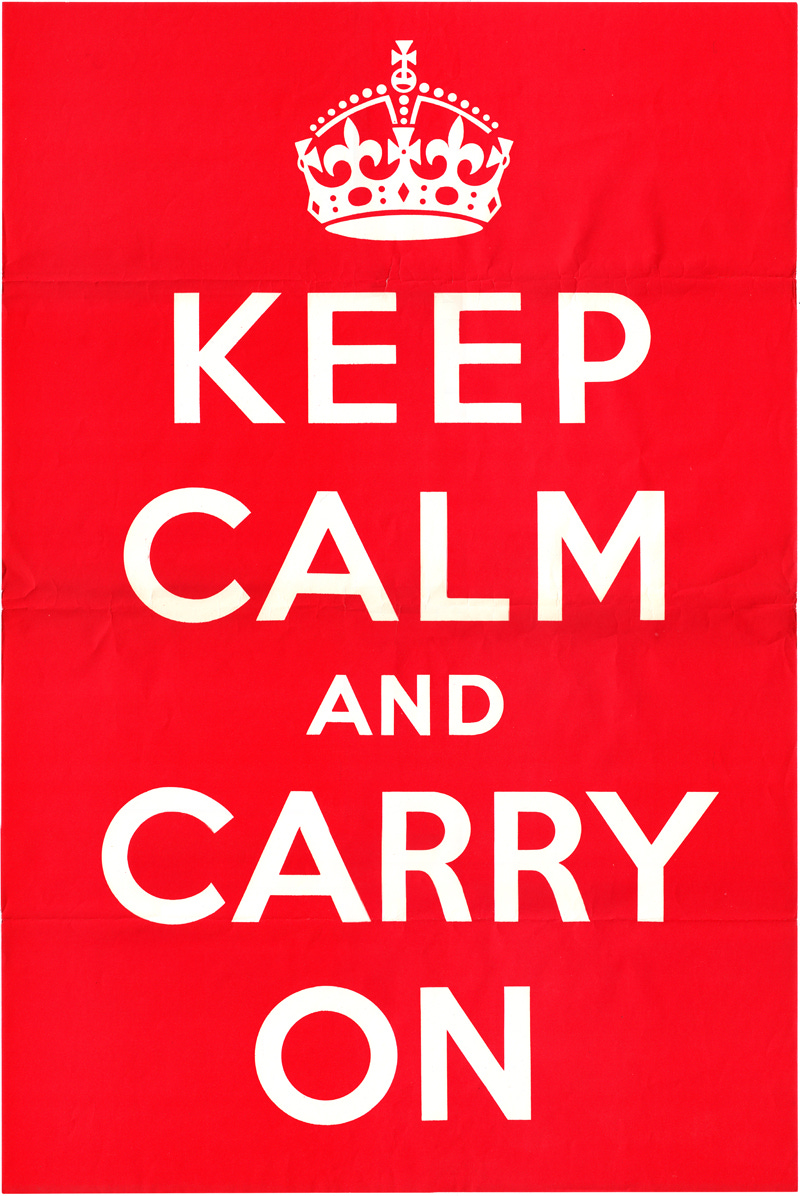
If there’s any sentence that I quote often when I send letters to my stakeholders, it would be “keep calm and carry on,” which the UK used during World War II.
Even in a serious situation, when I meet with investors, many tell me, “I’m glad to see you looking well,” because they are concerned about my mental health. Also, some colleagues often ask me how I manage stress, so I’d like to write about it today.
First, I’ve come to believe that the problems businesspeople face are not something to be depressed about. Think about the worst case—unlike the bad decisions of national leaders, our failures don’t result in hundreds of deaths. Granted, if I worked in the pharmaceutical industry, a mistake could kill many people, but my business is finance, so that is not the case, at least not directly.
Of course, I take my work seriously and I believe I’m properly committed, but it’s not right to sacrifice our health just for work. One of my mentors, who ran the biggest finance company in Japan for almost half a century, often tells me, “You should work hard, but work is not worth your life.” We do our best with what we can control, then simply wait for the results that arise from various combinations of external conditions. Do your best and God will do the rest.
Second, I take care of my physical health, because physical health is the foundation of mental health. We tend to think that humans are very intelligent, but in reality we are nothing but animals. As long as we exercise, eat, and sleep well, we should be alright. Therefore, even on busy days, I block time for exercise—30 minutes minimum and one hour on average. When I exercise, I get hungry, and after eating, I get sleepy. I don’t take caffeine 10 hours before going to bed. Even if my health situation doesn’t allow me to exercise, I spend time on something that lets me completely forget about work, such as music, photography, meditation, and so on.
Third, and perhaps most important, I try not to get overly excited in either positive or negative directions. In other words, I don’t overreact to either good things or bad things.
This is something I learned from ultramarathons. Usually, a well-trained person’s spirit doesn’t break from mere difficulty. However, sometimes such a person’s spirit breaks in the following situation: they overcome a very long hill and think, “Great, now I just need to reach the goal,” but encounter an even longer hill ahead. I’ve often seen people collapse at such moments, because of the feeling of never-ending suffering.
If that person hadn’t thought the worst was behind them, they wouldn’t have had their spirit broken when facing the next long steep hill. Because the mind swings between comfort and discomfort due to uncontrollable external conditions, people become exhausted and collapse. Mental swings are not good for mental health, and some people use these mental ups and downs to manipulate others, intentionally or unintentionally.
So, what’s important is maintaining mental calmness regardless of the situation. Actually, that is the logical conclusion, since as long as we’re alive, suffering exists. Almost nothing goes as planned—illness, weather, the macroeconomy, geopolitics, and so on. Perhaps the only thing we can control is our mindset. So I try not to overreact to situations. Of course, there are times when I can’t maintain this for a few hours, but I can regain my composure within a day.
Meditation helps a lot. It’s not religious or spiritual—it’s training for mental stability. Yuval Noah Harari is known for his 2-hour meditation practice every day.
This is a life lesson as well. Whether at work or anywhere else, we shouldn’t become arrogant when things go well, nor excessively pessimistic in the opposite case. We just keep calm and carry on. Suffering is inevitable as long as we’re alive, and I think it provides excellent mental training and learning opportunities.